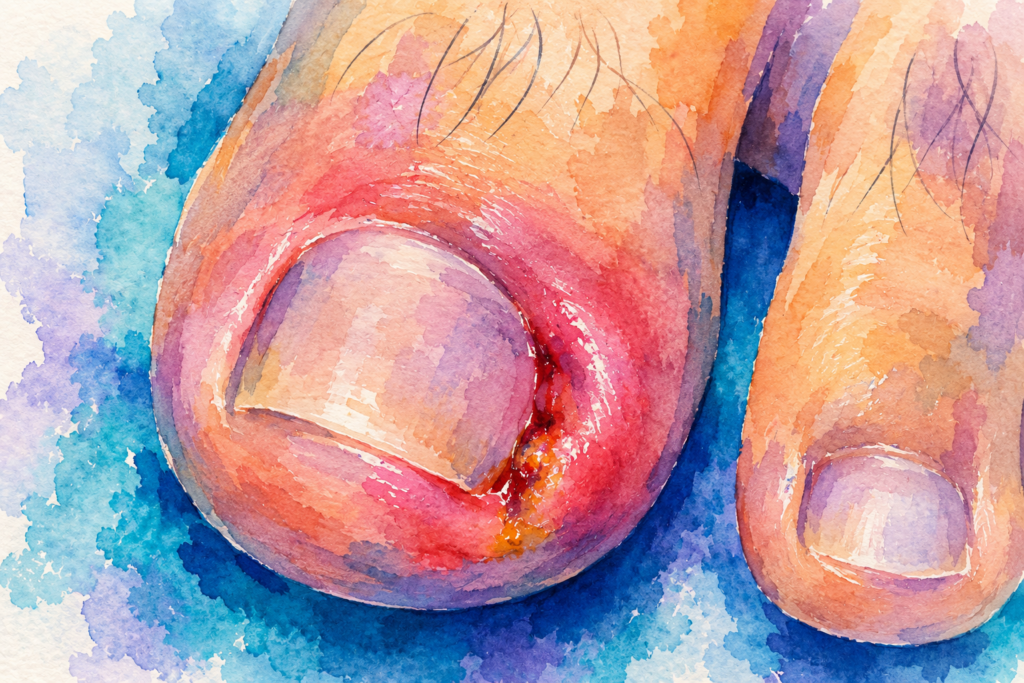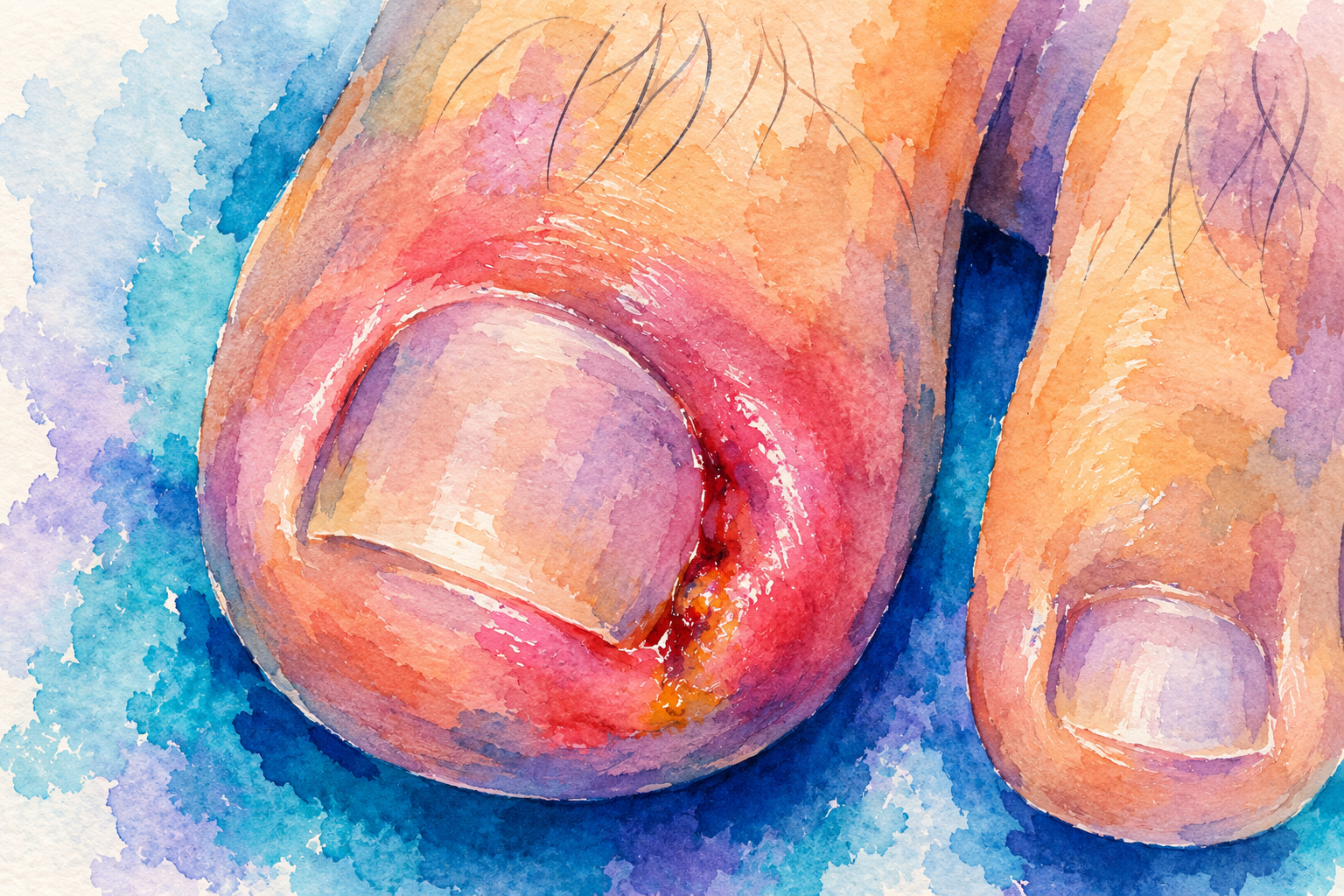
A sore toe may not seem like a big deal at first, but an ingrown toenail can quickly turn into a painful condition that affects your daily life. If you’re experiencing foot pain, swelling around your toenail, or discomfort while walking, an untreated ingrown toenail could be the cause.
At Foot & Ankle Care of Colorado, we help patients find relief from painful ingrown toenails before they become more serious.
What Is an Ingrown Toenail?
An ingrown toenail occurs when the edge of the nail grows into the surrounding skin instead of over it. This most commonly affects the big toe, although any toenail can become ingrown.
Common causes include:
- Cutting toenails too short or rounding the edges
- Wearing tight shoes or boots
- Repeated trauma from sports or running
- Naturally curved or thick toenails
- Genetics
How an Untreated Ingrown Toenail Gets Worse
Many people hope an ingrown toenail will heal on its own. Unfortunately, that’s often not the case.
1. Increasing Foot Pain
What begins as mild tenderness can become significant foot pain. As the nail continues digging into the skin, walking, exercising, and even wearing shoes can become uncomfortable.
2. Swelling and Redness
The body reacts to the nail piercing the skin by creating inflammation. You may notice:
- Redness
- Swelling
- Warmth
- Tenderness around the nail
Without treatment, these symptoms usually continue to worsen.
3. Infection
Once bacteria enter the broken skin, an infection can develop. Signs include:
- Pus or drainage
- Increased swelling
- Severe pain
- Bad odor
- Skin growing over the nail
An infected ingrown toenail rarely improves without proper medical care.
4. Difficulty Walking
As foot pain increases, many people begin changing how they walk to avoid pressure on the toe. This altered gait can eventually cause discomfort in the foot, ankle, knee, hip, or lower back.
5. Serious Complications
People with diabetes, poor circulation, or nerve damage face a greater risk of complications from an untreated ingrown toenail. Even a small infection can become serious if it isn’t addressed promptly.
When Should You See a Foot Specialist?
Schedule an evaluation if you have:
- Persistent foot pain around a toenail
- Swelling that doesn’t improve
- Drainage or pus
- Repeated ingrown toenails
- Diabetes or poor circulation with any toe injury
Early treatment is usually faster, less painful, and helps prevent recurring problems.
How Foot & Ankle Care of Colorado Can Help
Our experienced providers offer treatments based on the severity of your ingrown toenail. Care may include:
- Safe removal of the ingrown nail edge
- Treatment for infection
- Partial nail procedures to prevent recurrence
- Personalized guidance on proper nail trimming and footwear
Most procedures are performed in the office with minimal downtime, allowing many patients to return to normal activities quickly.
Preventing Future Ingrown Toenails
You can reduce your risk by:
- Cutting toenails straight across
- Avoiding trimming nails too short
- Wearing shoes with adequate toe room
- Keeping feet clean and dry
- Seeking treatment early when symptoms begin
Don’t Ignore Foot Pain
An ingrown toenail may seem minor, but delaying treatment can lead to worsening foot pain, infection, and difficulty walking. The sooner it’s evaluated, the easier it is to treat.
If you’re experiencing persistent foot pain or think you may have an ingrown toenail, contact Foot & Ankle Care of Colorado to schedule an evaluation. Prompt treatment can relieve pain, prevent complications, and help you get back on your feet comfortably.