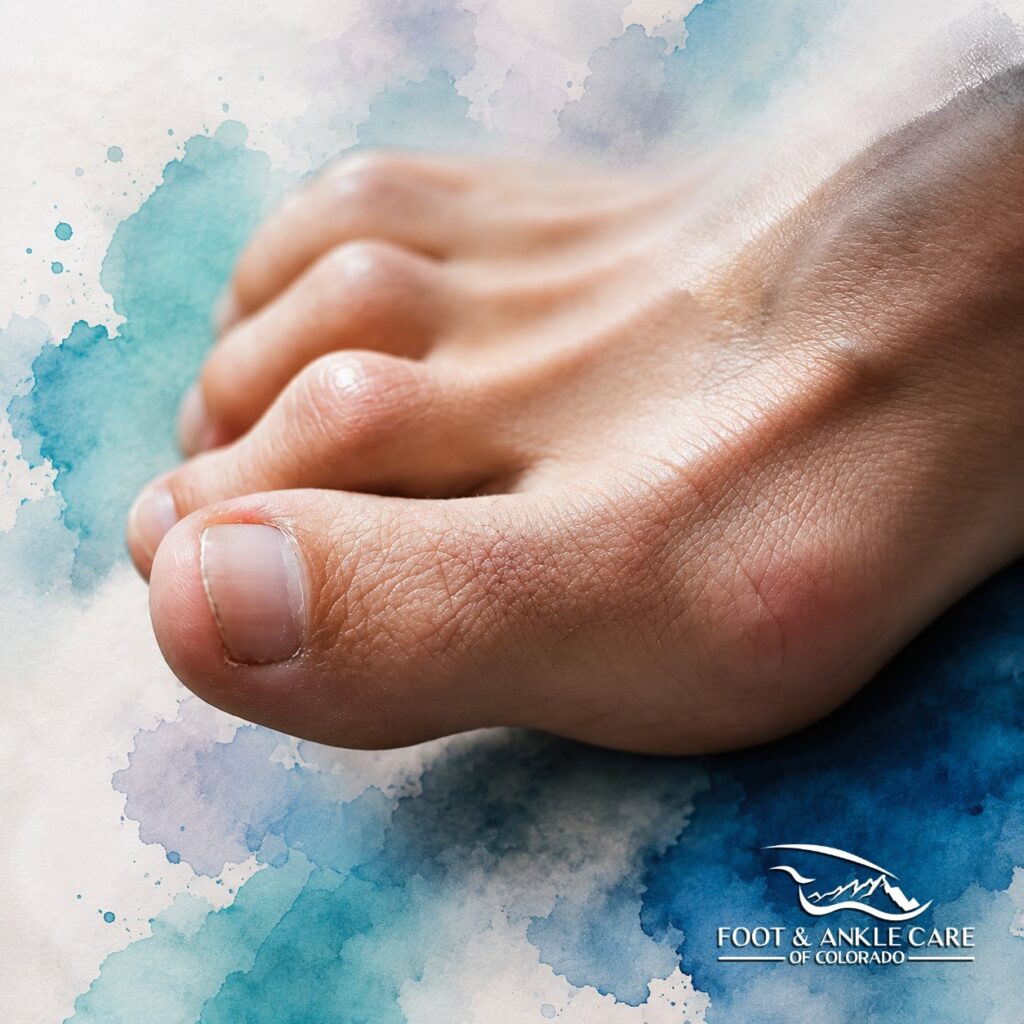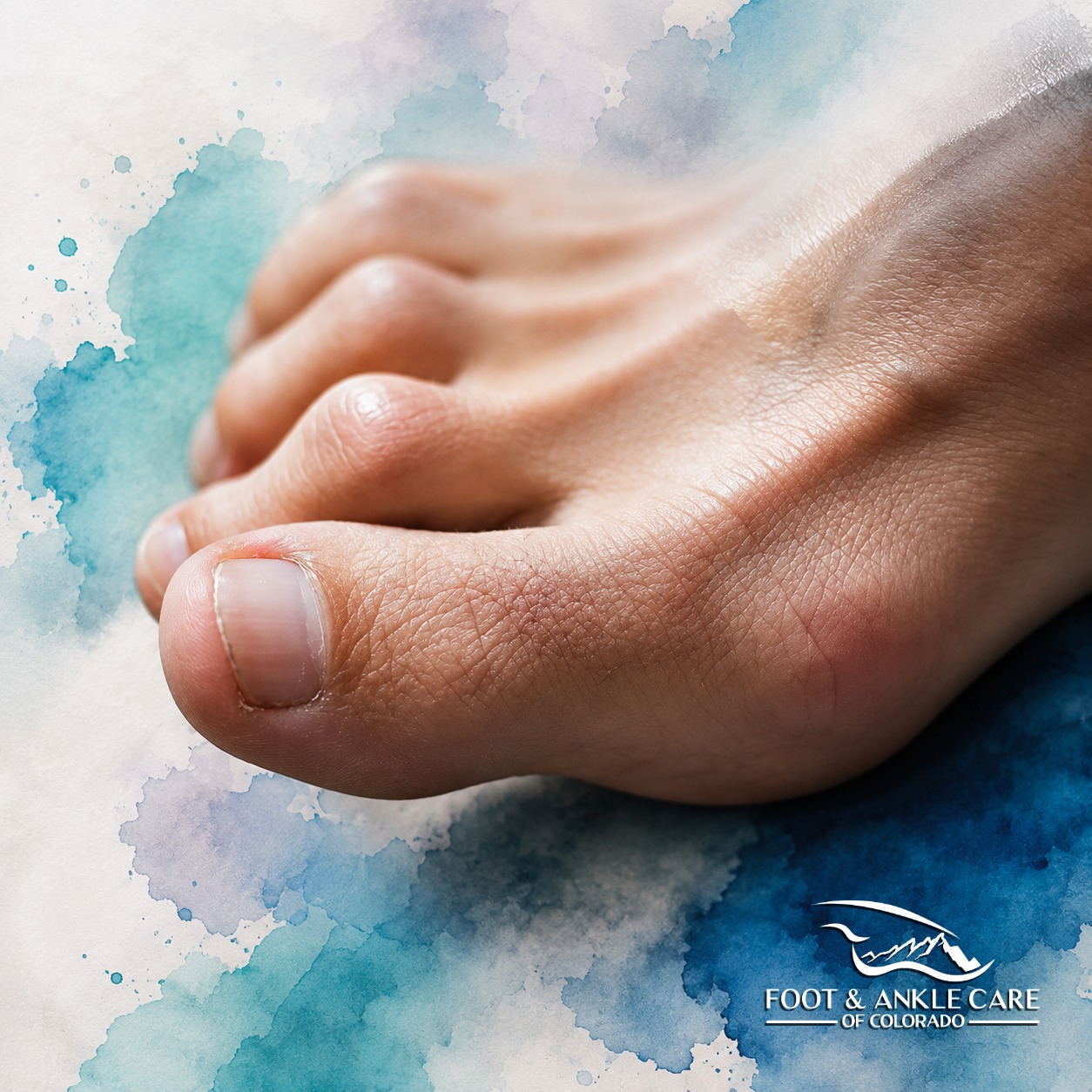
If one or more of your toes has started bending unnaturally at the middle joint, causing discomfort, rubbing, or difficulty wearing shoes, you may be dealing with hammer toe. This common foot condition can gradually worsen over time and may eventually interfere with walking, exercise, and daily activity.
At Foot & Ankle Care Of Colorado, we help patients manage and treat hammer toe at every stage—from conservative care to advanced surgical correction, including hammer toe release procedures designed to restore comfort and improve toe alignment.
What Is Hammer Toe?
Hammer toe is a deformity that causes one of the smaller toes—usually the second, third, or fourth toe—to bend downward at the middle joint. Instead of lying flat, the toe develops a curled or “hammer-like” appearance.
In the early stages, the toe may still be flexible. However, as the condition progresses, the muscles and tendons tighten, making the deformity more rigid and painful.
Common Causes Of Hammer Toe
Hammer toe often develops gradually over time due to muscle imbalance or prolonged pressure on the toes.
Common contributing factors include:
- Tight or narrow shoes
- High heels that crowd the toes
- Foot structure abnormalities
- Flat feet or high arches
- Arthritis
- Previous toe injuries
- Tendon or muscle imbalance
Over time, the toe joint becomes stuck in a bent position, increasing pressure and irritation.
Symptoms Of Hammer Toe
Symptoms can vary depending on the severity of the deformity, but common signs include:
- A bent or curled toe appearance
- Pain when wearing shoes
- Corns or calluses on the top of the toe
- Redness or swelling around the joint
- Difficulty moving the toe
- Pain while walking or standing
Many patients initially notice discomfort only in certain shoes, but untreated hammer toe often becomes progressively more painful.
Why Hammer Toe Should Not Be Ignored
Hammer toe is more than a cosmetic issue. As the deformity worsens, it can create ongoing pressure and friction that affects surrounding joints and tissues.
Without treatment, hammer toe may lead to:
- Chronic foot pain
- Difficulty finding comfortable footwear
- Skin breakdown or ulcers
- Balance problems
- Joint stiffness and arthritis
Early treatment can help slow progression and improve comfort before the deformity becomes rigid.
Diagnosing Hammer Toe
At Foot & Ankle Care Of Colorado, we perform a thorough evaluation to determine the severity of the hammer toe and identify any contributing biomechanical issues.
This may include:
- Physical examination of the toe and foot structure
- Assessment of flexibility and joint movement
- Gait analysis
- X-rays if necessary to evaluate joint alignment
Understanding the severity of the condition helps guide the most effective treatment plan.
Conservative Hammer Toe Treatment Options
Many cases of hammer toe can initially be managed with non-surgical treatment.
Supportive Footwear
Shoes with a wider toe box reduce pressure on the affected toes and improve comfort.
Padding And Splinting
Protective pads or splints can reduce friction and help support proper toe alignment.
Custom Orthotics
Custom orthotics improve foot mechanics and redistribute pressure away from the toes.
Stretching And Exercises
Toe exercises may help maintain flexibility and reduce stiffness in mild cases.
While conservative care can relieve symptoms, more advanced or rigid hammer toes may require surgical correction.
What Is Hammer Toe Release?
A hammer toe release is a surgical procedure used to straighten the toe and relieve tension in the affected tendons and joints.
Depending on the severity of the deformity, the procedure may involve:
- Releasing or lengthening tight tendons
- Removing a small portion of bone from the joint
- Realigning the toe into a more natural position
- Stabilizing the toe during healing
Hammer toe release is often performed as an outpatient procedure, allowing patients to return home the same day.
Recovery After Hammer Toe Release
Recovery varies depending on the procedure performed and the severity of the hammer toe.
Most patients can expect:
- Temporary swelling and stiffness
- Protective footwear during healing
- Gradual return to activity over several weeks
- Improved comfort and toe alignment once healed
Our team provides detailed post-operative guidance to help ensure the best possible outcome.
How Foot & Ankle Care Of Colorado Can Help
At Foot & Ankle Care Of Colorado, we create personalized treatment plans based on your symptoms, activity level, and long-term goals. Whether your hammer toe is mild or advanced, we focus on relieving pain, improving function, and helping you move comfortably again.
From conservative care to hammer toe release procedures, our team is here to help every step of the way.
Take The First Step Toward Relief
If you are experiencing toe pain, rubbing, or difficulty wearing shoes, don’t wait for the condition to worsen. Early treatment can help prevent long-term joint problems and improve your overall comfort.
Schedule an appointment with Foot & Ankle Care Of Colorado today to learn more about hammer toe treatment options and whether hammer toe release may be right for you.