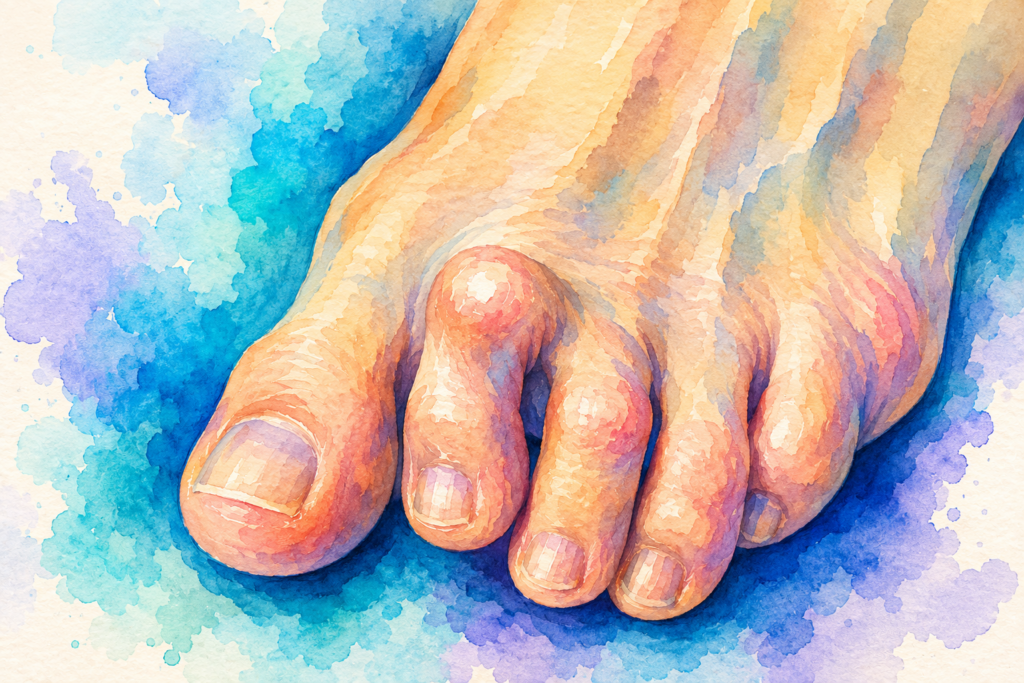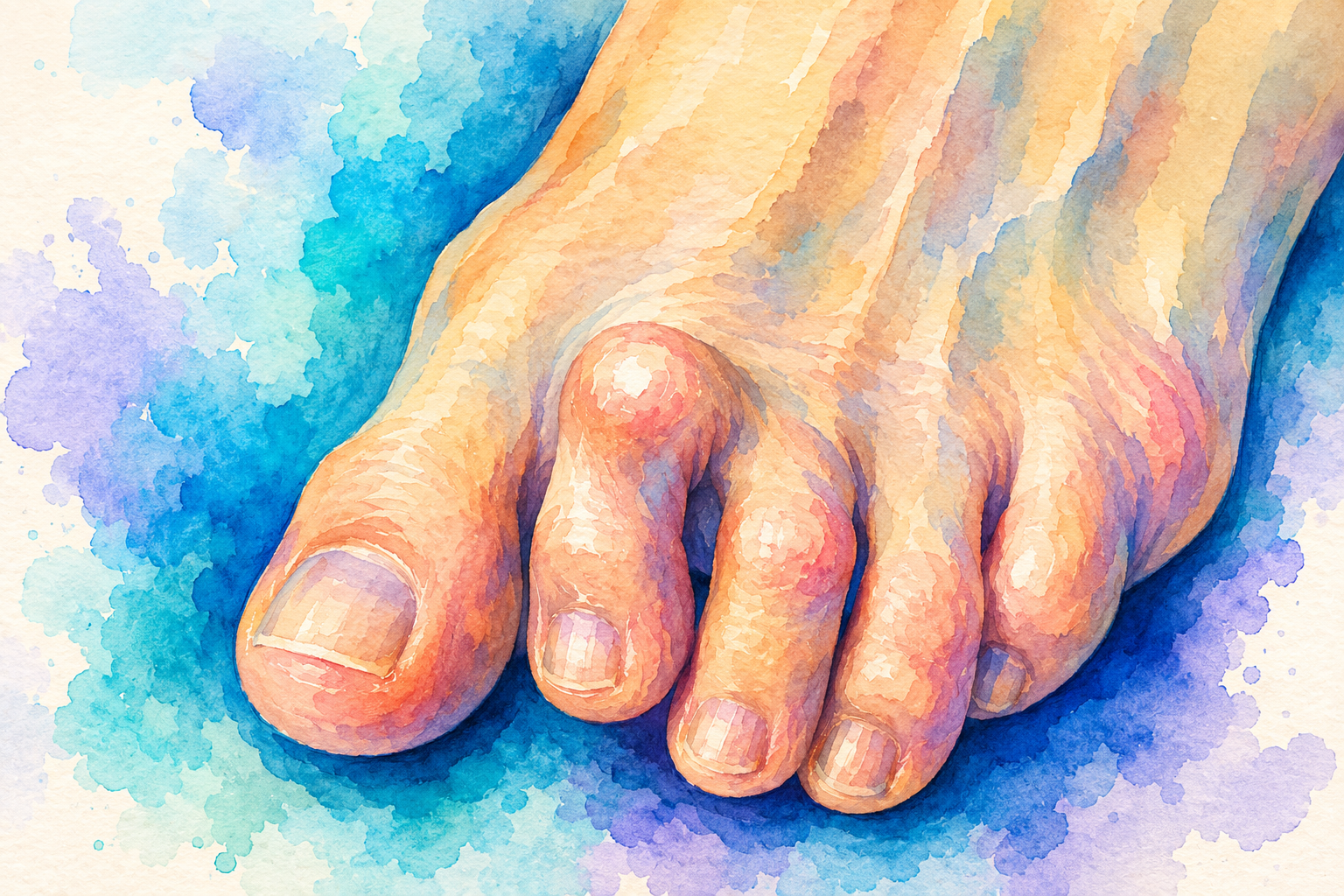
If one of your toes has become bent at the middle joint and no longer lies flat, you may have Hammer Toe. This common foot condition can make wearing shoes uncomfortable, cause persistent pain, and interfere with everyday activities. Fortunately, early treatment can help relieve symptoms and prevent the deformity from becoming more severe.
At Foot & Ankle Care of Colorado, we diagnose and treat Hammer Toe with personalized care plans designed to reduce pain, improve function, and help you stay active.
What Is Hammer Toe?
Hammer Toe is a deformity in which one of the smaller toes bends downward at the middle joint, creating a hammer-like appearance. The condition most commonly affects the second toe but can also involve the third or fourth toes.
In the early stages, Hammer Toe may remain flexible and can often be corrected with conservative treatment. Over time, however, the toe may become rigid, making treatment more challenging and increasing the likelihood that surgery will be needed.
What Causes Hammer Toe?
Several factors can contribute to the development of Hammer Toe, including:
- Muscle and tendon imbalance
- Wearing shoes with a narrow toe box or high heels
- Bunions that force neighboring toes out of alignment
- Arthritis
- Foot injuries
- Flat feet or high arches
- Genetics
These factors can place excessive pressure on the toe joints, eventually causing the toe to remain in a bent position.
Common Symptoms of Hammer Toe
Symptoms of Hammer Toe may develop gradually and include:
- A bent or curled toe
- Pain when wearing shoes
- Corns or calluses on the top of the toe
- Pain beneath the ball of the foot
- Redness or swelling
- Difficulty moving the affected toe
- Irritation from shoes rubbing against the toe
As the condition progresses, even walking barefoot may become uncomfortable.
What Happens If Hammer Toe Is Left Untreated?
Without treatment, Hammer Toe often becomes more rigid over time.
Possible complications include:
- Chronic foot pain
- Larger corns and calluses
- Joint stiffness
- Difficulty finding comfortable footwear
- Balance problems
- Increased pressure on other toes
- Open sores in patients with diabetes or poor circulation
Seeking care early often allows for more conservative treatment options.
How Hammer Toe Is Diagnosed
At Foot & Ankle Care of Colorado, we perform a thorough evaluation to determine the severity of your Hammer Toe.
Your assessment may include:
- Review of your symptoms and medical history
- Physical examination
- Evaluation of toe flexibility
- Assessment of foot mechanics
- Gait analysis
- X-rays to evaluate joint alignment and determine whether arthritis or other structural changes are present
This evaluation helps us create a treatment plan tailored to your specific needs.
Treatment Options for Hammer Toe
Treatment depends on the severity of your condition and whether the toe remains flexible.
Supportive Footwear
Shoes with a wide, deep toe box reduce pressure on the affected toe and improve comfort throughout the day.
Custom Orthotics
Custom orthotics can improve foot mechanics, redistribute pressure, and reduce strain contributing to Hammer Toe progression.
Padding and Splints
Protective pads or splints may reduce friction, improve comfort, and help maintain proper toe positioning in flexible deformities.
Stretching and Strengthening Exercises
Specific exercises can help maintain flexibility and improve muscle balance in the foot.
Corn and Callus Care
Professional treatment of painful corns and calluses can provide significant symptom relief while reducing skin irritation.
Surgical Correction
If Hammer Toe becomes rigid or conservative treatments no longer relieve symptoms, surgery may be recommended to straighten the toe and restore function.
How Foot & Ankle Care of Colorado Can Help
At Foot & Ankle Care of Colorado, we understand that every patient’s feet and lifestyle are unique. Our goal is to relieve pain while preserving mobility and helping you return to your normal activities.
Our services include:
- Comprehensive foot evaluations
- Digital imaging when appropriate
- Personalized treatment plans
- Custom orthotics
- Footwear recommendations
- Corn and callus management
- Surgical consultation and correction when necessary
- Long-term follow-up to help prevent recurrence and maintain foot health
We focus on treating both the symptoms and the underlying causes of Hammer Toe whenever possible.
Can Hammer Toe Be Prevented?
While some cases result from inherited foot structure, you can lower your risk of developing or worsening Hammer Toe by:
- Wearing properly fitting shoes with a roomy toe box
- Limiting prolonged use of high heels
- Performing foot and toe stretching exercises
- Treating bunions or other foot conditions early
- Seeking medical evaluation when toe discomfort first develops
Early intervention often helps slow progression and improves long-term outcomes.
Don’t Let Hammer Toe Limit Your Mobility
Although Hammer Toe is a common condition, it doesn’t have to interfere with your quality of life. Early diagnosis and personalized treatment can reduce pain, improve comfort, and help prevent the condition from becoming more severe.
If you’re experiencing toe pain, difficulty wearing shoes, or notice a toe beginning to bend, schedule an appointment with Foot & Ankle Care of Colorado. Our experienced team is dedicated to diagnosing and treating Hammer Toe, helping you get back to walking comfortably and confidently.